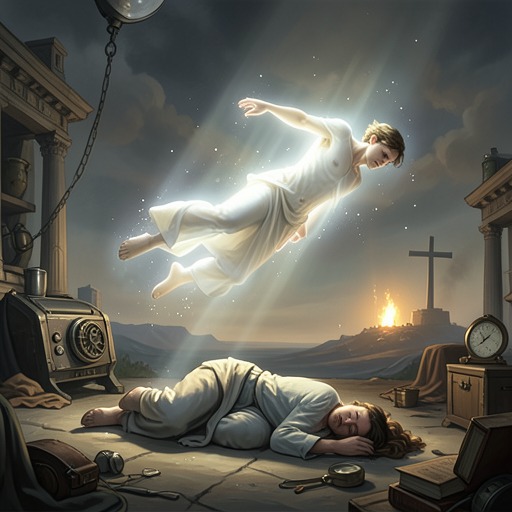
Mary
Paradise LostMary is presented as the Virgin Mother through whom the Son of God enters human history. Her importance lies not in an extended personal biography but in her position at the hinge between the Fall and redemption: through her wondrous birth the divine Son is made flesh, assumes humanity, and becomes the new head of mankind in Adam’s place.## Identity and Place in Salvation HistoryMary’s defining identity is given through the prophecy that the Saviour will be born of a virgin. Michael explains that the promised ruler will arise from the royal stock of David, while his mother will be a Virgin and his father will be the power of the Most High. The prophecy therefore joins two lines that might otherwise remain separate: the human descent associated with David and the divine origin associated with God. Mary is the human vessel of that union, and her motherhood makes possible the passage from promise to historical fulfilment.## Relation to the FallMary’s role is framed against the first human transgression. Adam and Eve were created free, given dominion over the living world, and warned that eating from the Tree of Knowledge of Good and Evil would bring death. When Eve is deceived and Adam follows her, the sentence reaches their descendants; yet God declares that mankind will not be wholly lost and that grace will provide a way of rescue. The Son of God offers himself as life for human life, accepting incarnation, suffering, and death so that justice may be satisfied without abandoning mercy. Mary becomes indispensable to this movement because the Son must be made flesh and joined to human nature.## The Virgin Mother and the Second RootMichael identifies the Saviour as the Woman’s Seed foretold after the serpent’s curse. Adam understands the prophecy with sudden joy: the Virgin Mother is high in the love of Heaven, and from her womb the Son of God will unite God with man. The image of Mary as the source of this new birth reverses the direction of the Fall. Adam is the first root from whom humanity inherits guilt; the incarnate Son, born through Mary, becomes a second root from whom restored humanity may receive new life. Her maternity thus carries a representative significance: the human nature that was implicated in Adam’s failure is taken up again in the person of the Redeemer.## Birth of the MessiahThe prophetic account gives Mary a precise place in the public revelation of the Messiah’s arrival. At the birth, a previously unseen star announces the child, Eastern sages are guided to his birthplace and bring incense, myrrh, and gold, and an angel reveals the place to shepherds watching by night. The shepherds hurry there and hear a choir of angels sing. Against these celestial signs stands the simplicity of the mother: the prophecy names her as a Virgin, while the father of her child is the power of the Most High. Her presence therefore marks the meeting of hidden divine action and visible human birth.## Mary’s Theological SignificanceMary’s significance extends beyond the scene of birth because the Son’s whole redemptive work depends on the humanity he assumes. He fulfills the law by obedience and love, endures reproach and a cursed death, rises from the grave, defeats Sin and Death, and offers salvation to those who receive his merit by faith. He later ascends in triumph, commissions his disciples to teach all nations, and will return to judge the living and the dead. Mary stands at the beginning of this sequence as the maternal point through which the Redeemer becomes man. In that sense, her role answers the catastrophe of the Fall not by erasing human nature but by making it the medium of restoration. Adam’s guilt spreads through his sons, while the incarnate Son’s merit may absolve those who renounce their own deeds and live in him; Mary is the figure through whom this second beginning enters the human story.